
Why does the volcano erupt?
Baking soda goes into a play-dough volcano. Pour in vinegar with a drop of dish soap, and red foam pours out of the top and runs down the sides.
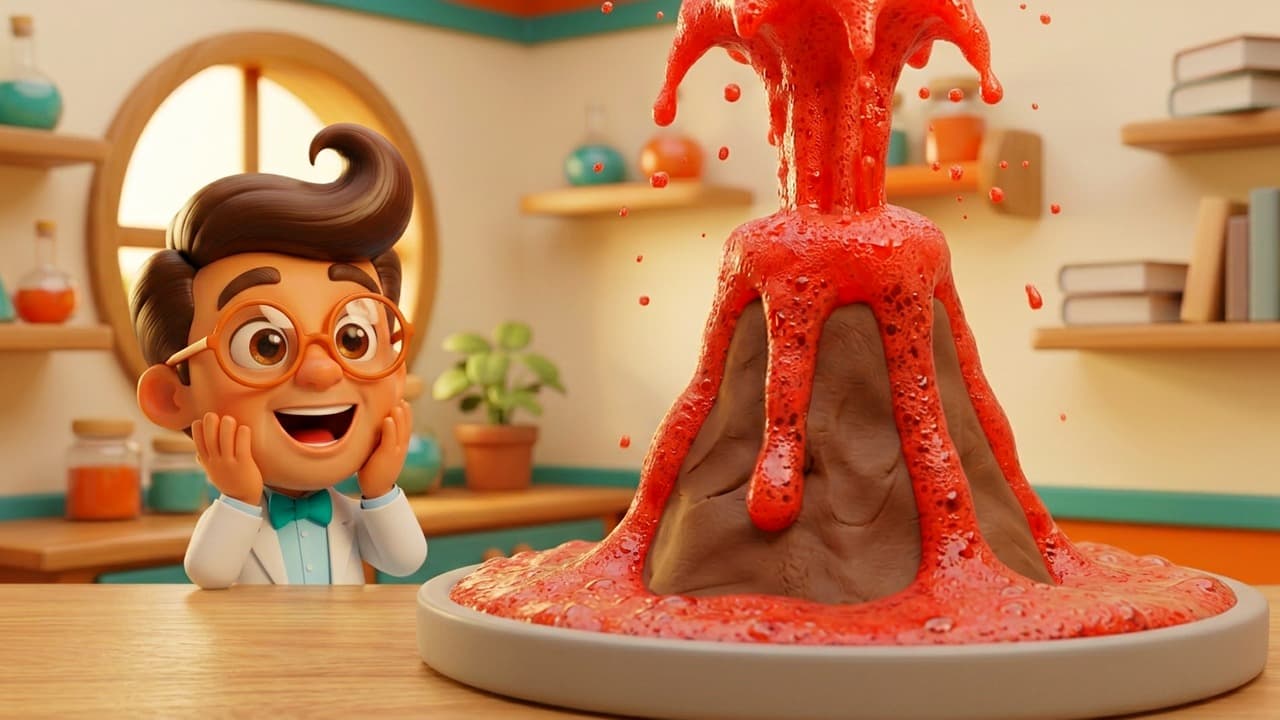 Watch on YouTube
Watch the episode: https://www.youtube.com/watch?v=jFzGgBq9A-I
You need
- A small volcano made of play dough around a small cup, on a tray
- Baking soda (two big spoons)
- Vinegar (about half a cup)
- A drop of dish soap
- A little red food colouring
Ask a grown-up to help. Ask a grown-up to help. Do it on a tray or outside, keep your face back, do not taste it, and wash your hands afterwards.
Try it
- Build a play-dough volcano around a small cup and stand it on a tray.
- Put two big spoons of baking soda into the cup.
- In a jug, mix the vinegar with a drop of dish soap and a little red food colouring.
- Guess first: what happens when the vinegar meets the baking soda?
- Pour the vinegar into the volcano and watch it erupt!
- For another eruption, add more baking soda and pour in more vinegar.
Why did it happen?
When vinegar meets baking soda, they make something new: a gas. That is called a reaction. The gas makes lots and lots of bubbles, and bubbles need room, so they push up and out of the volcano. The dish soap catches the bubbles and turns them into foam: that is our lava. A real volcano is a bit like this: gas pushes hot, melted rock up and out. (A real volcano has no vinegar or baking soda in it, and real lava is melted rock, not foam.)
New science word: reaction. It means when two things meet and make something new.
Your challenge
Try it again with more baking soda. Is the eruption bigger?