Can a balloon blow itself up?
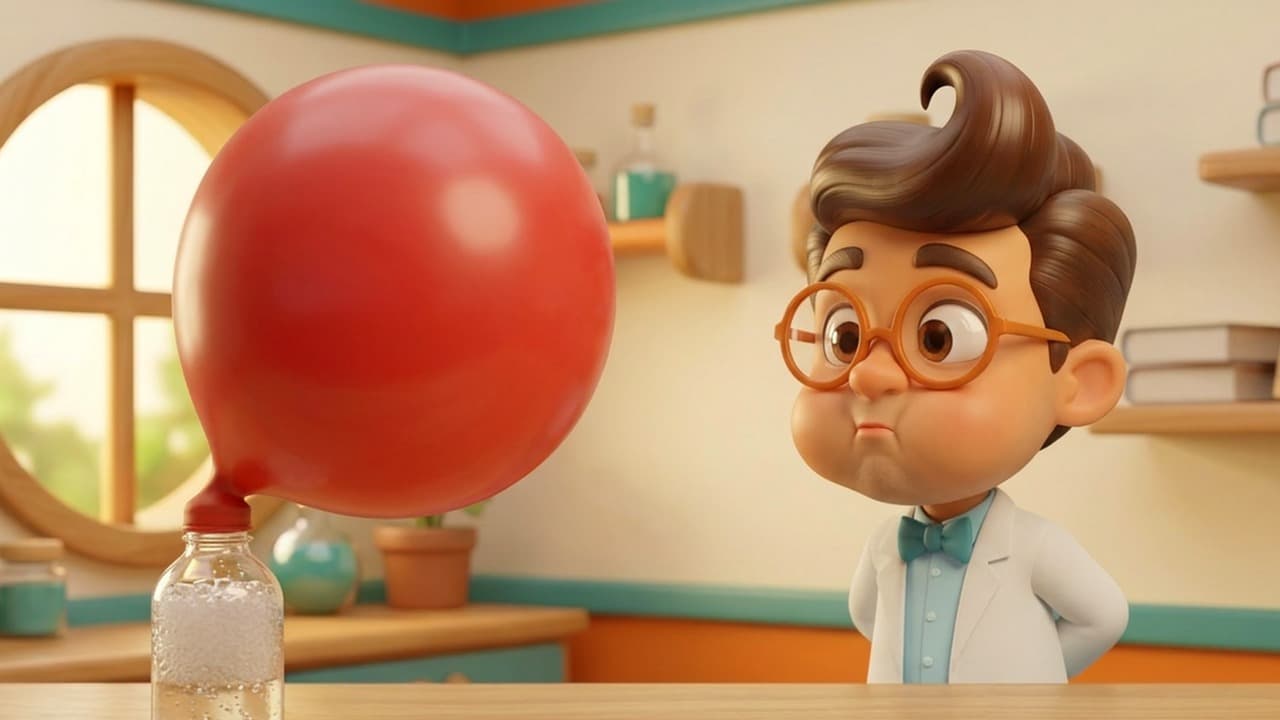
A balloon sits on top of a bottle. Nobody blows into it, and still it gets bigger and bigger. Vinegar and baking soda do the work.
 Watch on YouTube
Watch the episode: https://www.youtube.com/watch?v=ar1d6J8y8Xs
You need
- 1 clean plastic bottle (about half a litre)
- Vinegar (about 1 cup)
- 2 teaspoons of baking soda
- 1 balloon
- A funnel and a teaspoon
- A tray or a plate to stand the bottle on
Ask a grown-up to help. A grown-up pours the vinegar and puts the balloon on the bottle. Vinegar stings in the eyes, so do not lean over the bottle. Do not drink anything from the experiment. Balloons are not toys for small children: keep them away from children under 3 and never put one in your mouth.
Try it
- Stand the bottle on the tray. A grown-up pours vinegar into the bottle until it is about one third full.
- Put the funnel into the balloon and spoon in 2 teaspoons of baking soda.
- A grown-up stretches the balloon over the neck of the bottle. Let the balloon hang to the side so the powder does not fall in yet.
- Guess first: what will happen when the powder falls in?
- Lift the balloon up so the baking soda falls into the vinegar.
- Watch the fizz and the balloon!
Why did it happen?
When vinegar and baking soda meet, they make something new: a gas called carbon dioxide. You see it as lots of tiny bubbles. The gas needs room, and there is not enough room in the bottle, so it pushes up into the balloon and fills it.
New science word: gas. It means something like air: you usually cannot see it, but it takes up space.
Your challenge
Try lemon juice instead of vinegar. Will the balloon still blow up?