
Can an egg float?
An egg sinks in a glass of plain water. Stir plenty of salt into the water and the very same egg floats at the top.
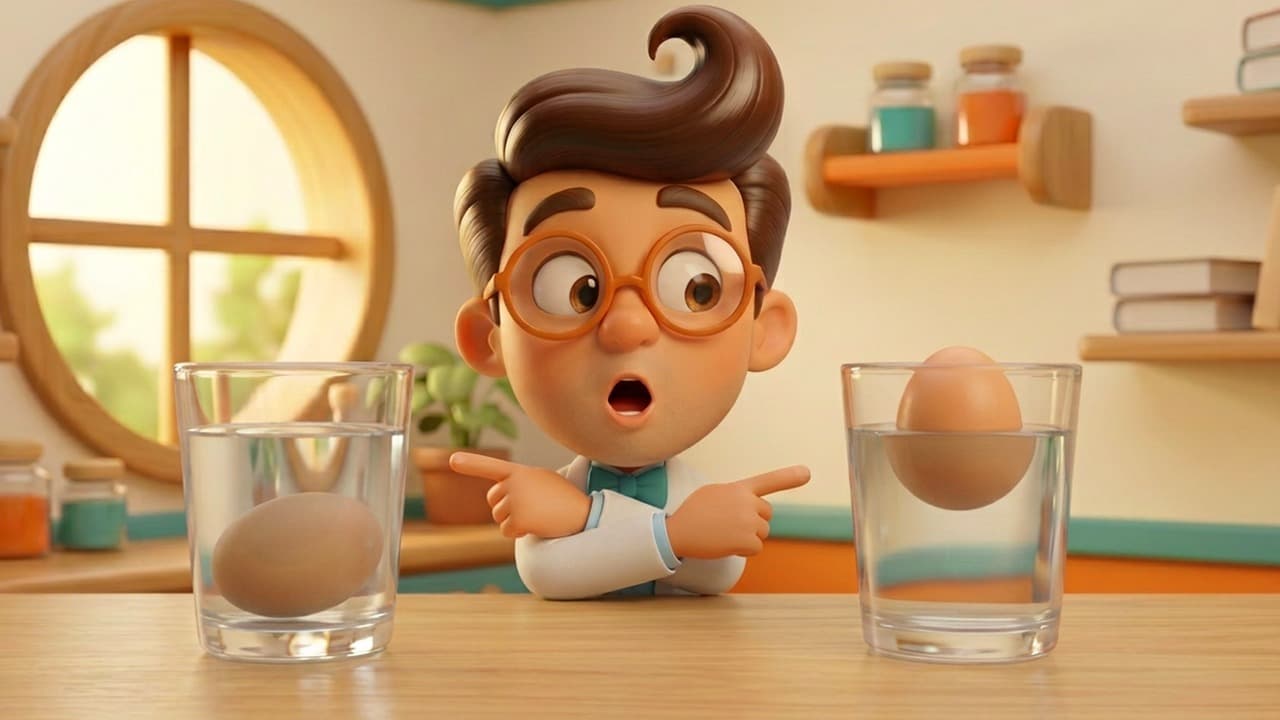 Watch on YouTube
Watch the episode: https://www.youtube.com/watch?v=Cjslq5yAC54
You need
- An egg (fresh; a hard-boiled egg works too and makes no mess)
- Two glasses with the same amount of water
- Salt (several tablespoons)
- A spoon
Ask a grown-up to help. Ask a grown-up to help. Wash your hands after touching a raw egg. Do not drink the salty water.
Try it
- Put the egg gently into the first glass of water. It sinks to the bottom.
- Pour plenty of salt into the second glass: start with three tablespoons.
- Stir until you cannot see the salt any more.
- Guess first: will the egg sink again, or will it float?
- Lift the egg out with the spoon and put it gently into the salty water.
- If it still sinks, take it out, stir in another spoon of salt and try again.
Why did it happen?
Salty water is packed with salt, so a glass of salty water is heavier than the same glass of plain water. We say salty water is more dense. An egg is a little heavier than plain water for its size, so it sinks. Very salty water is heavier than the egg for its size, so it holds the egg up. The sea is salty too: that is why floating is easier in the sea than in a swimming pool. One more thing: an old egg can float even in plain water, because the pocket of air inside it grows as the egg gets older. Use a fresh egg.
New science word: dense. It means heavy for its size: salty water is more dense than plain water.
Your challenge
Add the salt one spoon at a time. How many spoons until your egg floats?