
Why do raisins dance?
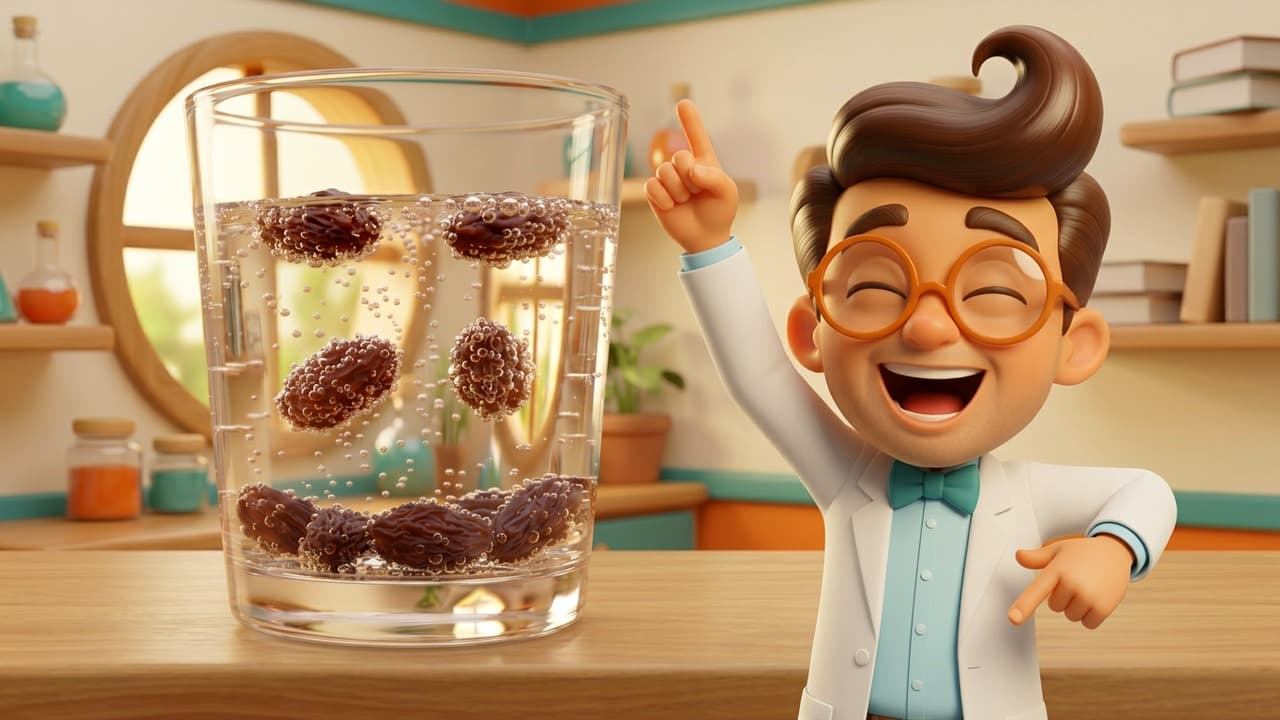
Raisins sink in a glass of plain water and stay on the bottom. In fizzy water the same raisins rise to the top, sink and rise again, as if they were dancing.
 Watch on YouTube
Watch the episode: https://www.youtube.com/watch?v=915HeXUqA90
You need
- Raisins (a small handful; small, dry ones that do not stick together)
- A glass of plain water
- A glass of fizzy water (sparkling water or clear soda, freshly poured)
Ask a grown-up to help. Ask a grown-up to help and to open the bottle. Do not eat the raisins from the experiment glass after you have tried other things in it.
Try it
- Drop a few raisins into the glass of plain water. They sink to the bottom and stay there.
- Guess first: in fizzy water, will they stay down too?
- Drop a few raisins into the glass of fizzy water. They sink.
- Watch closely for a minute: tiny bubbles gather on the raisins, and one after another they rise to the top.
- At the top the bubbles pop and the raisins sink again. Count how many times one raisin goes up.
- If your raisins stay down, cut them in half or pour fresh fizzy water.
Why did it happen?
Fizzy water is full of a gas called carbon dioxide. You can see it: it is the bubbles. A raisin is a little heavier than water for its size, so it sinks. Bubbles like to stick to rough things, and a raisin is full of wrinkles, so bubbles gather all over it. Like lots of tiny balloons, they lift the raisin up. At the top the bubbles pop, the raisin is heavy again and it sinks, and on the way it collects new bubbles. This goes on until the water has lost its fizz.
New science word: carbon dioxide. It means the gas that makes the bubbles in fizzy drinks.
Your challenge
Try other small things: a grain of rice, a piece of pasta. Which ones dance?